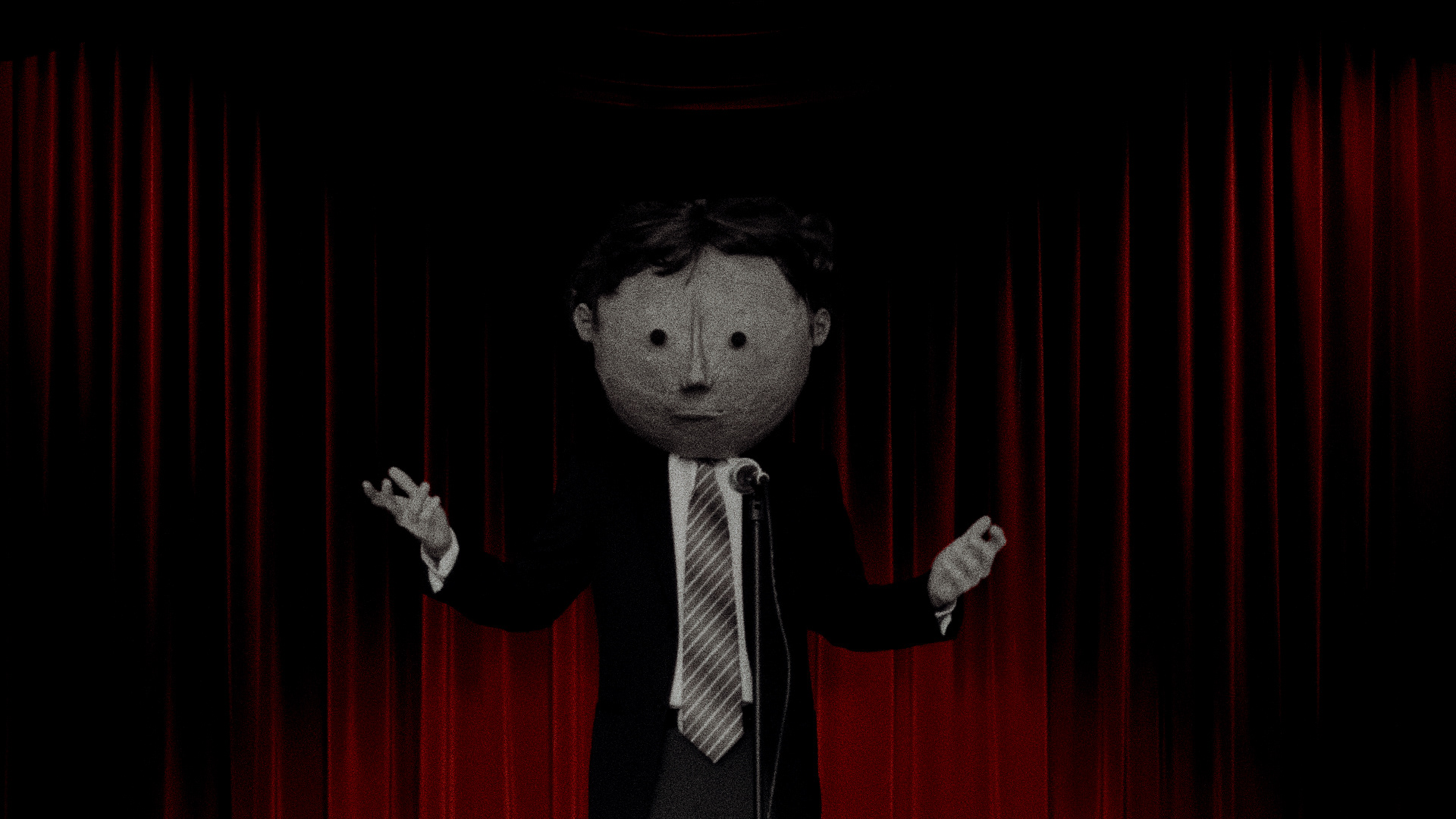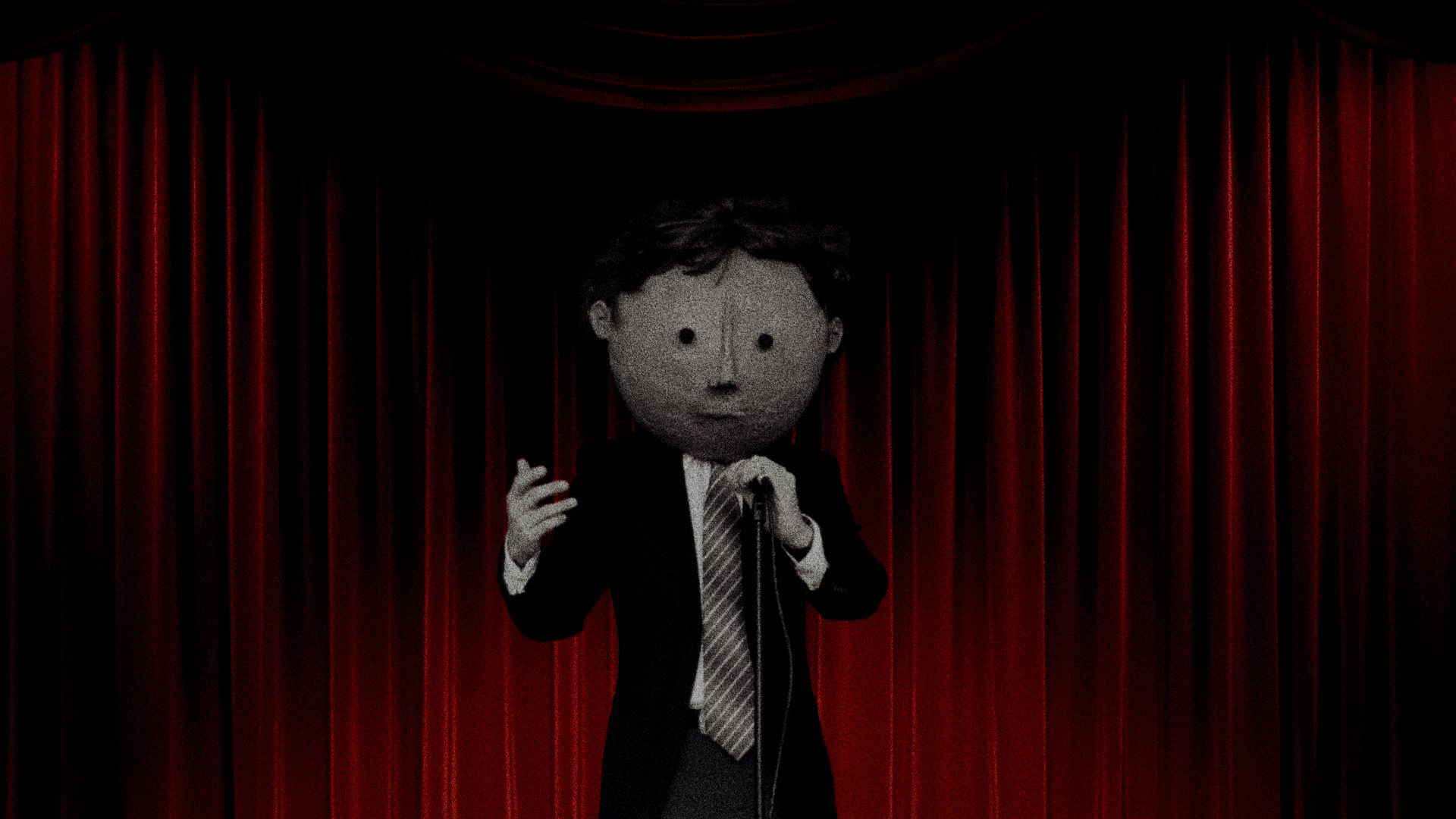
A comedian. Three nights. Just one fucking laugh.
Jimmy Edwards tells jokes for a living. Nobody laughs. Three episodes, one stage, one man unraveling in real time — a living puppet theatre of failure, denial and accidental grace.
The show is equal parts tragedy and punchline; Eraserhead and open mic night; the sublime and the pathetic. It is simultaneously the man who thinks he deserves the laugh and the man who has never come close to earning it.
Blunt and raw. No safety net, no redemption arc, no fourth wall. An exposed structure built on humiliation, bad lighting and the specific cruelty of being heard for all the wrong reasons.
The Arc
Three episodes. Three bathrooms. Three routines that never land.
Each episode tightens the circle. Episode one he fails publicly. Episode two he fails and doesn't notice. Episode three he fails, finds peace with it, and dies. The audience applauds only once — at the end, for the wrong reason entirely.
The arc belongs to nobody but Jimmy. The audience never roots for him. The boss never learns his name. The stage never stops being too bright. Everything stays exactly the same. Jimmy is the only thing that changes, and he does it alone, in a fever dream, seconds before a fresnel light ends his career permanently.
Character
Jimmy was designed as a man caught between who he believes he is and what he actually is. That gap is where every joke lives and dies.
The identity erosion is structural. By episode three Jimmy introduces himself with the wrong name and doesn't notice. The mirror he breaks in episode one is never replaced. The only reflection left is the stage light — and that one kills him.
The show required a character with no self-awareness and complete sincerity. Jimmy is not in on the joke. He never is.
Visual Language
The Smiley Cellar is a venue that was never good and is getting worse. The visual language follows: institutional, decaying, under-lit except where it counts. The fresnel spotlight is the only thing with any authority in the room. It is also the thing that kills him.
The fever dream breaks from the show's naturalism into abstract cinema — industrial sound, surreal imagery, total white. It is the only sequence where Jimmy is at peace, and nobody in the audience sees it.
Living Puppet Theatre
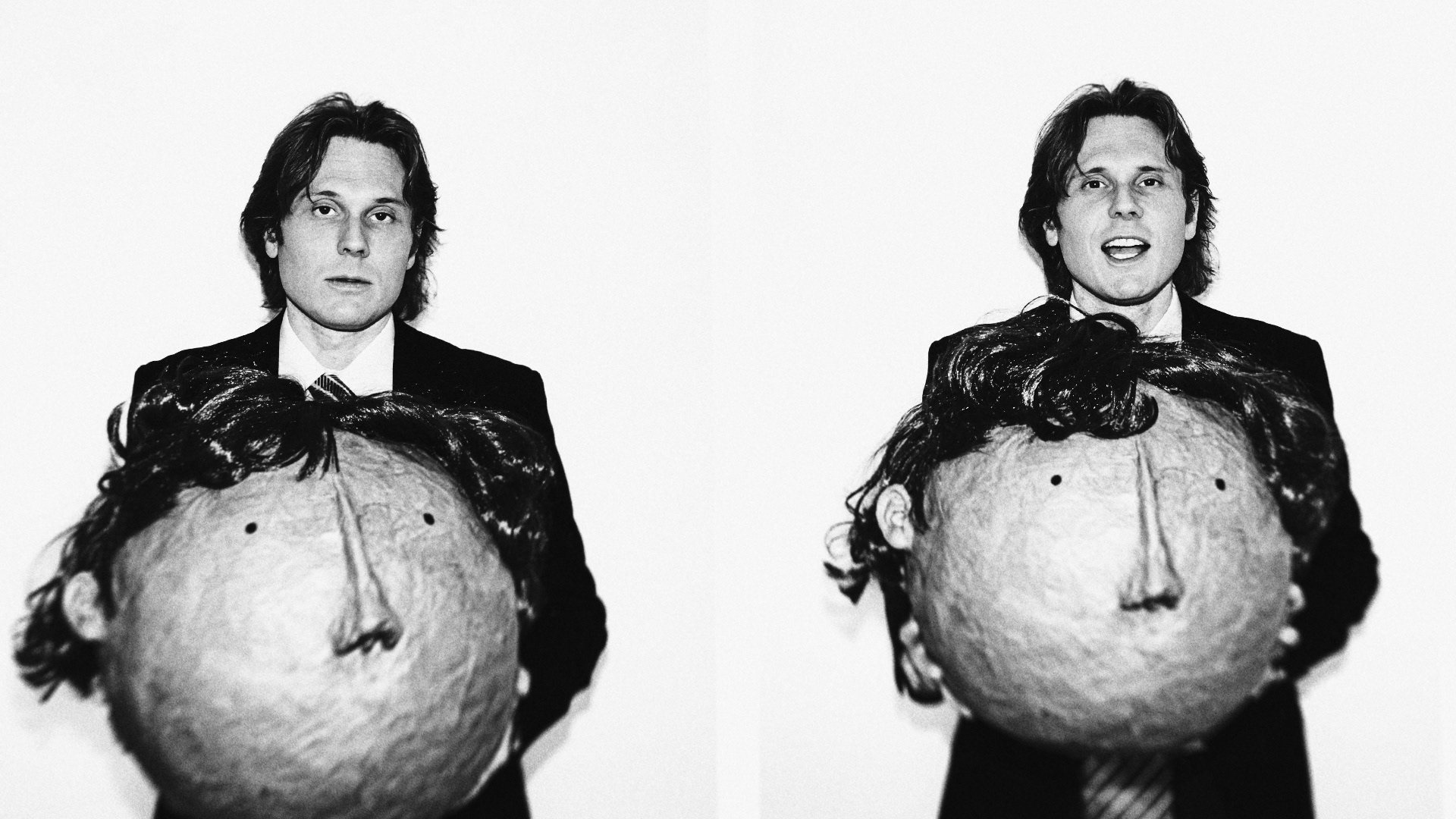
The animation pipeline treats Jimmy as a puppet in his own life. 3D body, 2D face — constructed, mechanical, fundamentally not in control of his own movements. He falls over cables. He pukes. He screams into mirrors. The body does what it wants. The forehead sweats. The foot catches.
The technique is the character. Jimmy Edwards is a man being operated by forces slightly beyond him. He just doesn't know it yet.